At the beginning of my freelance career I went to a networking meeting. There were talks, and one of them was really good. I sat there thinking: wow, if you implement even a tiny part of this, your business goes through the roof. I took notes, page after page. And I walked out of that meeting totally inspired.
At home it was already late. I did nothing more with the notes that evening. The next day there were projects to do, and the notebook just lay there.
At some point I wrote new notes in it, because something else needed doing again. Later I put something on top of it. And the whole time I had a guilty conscience: this knowledge was so valuable, I really had to do something with it.
After two or three weeks it was over. I no longer knew what the man had said. In parts I couldn't even read my own handwriting anymore. And the high, that “I have to do this” feeling, was gone.
A few years later I was at another event like that. I was still convinced that I would take away valuable and above all actionable knowledge. Someone was up on stage, and I thought again: wow, if you implement even a small part of this, your business goes through the roof. I took notes.
It took a few minutes until it hit me: this isn't new to me. It even sounded very familiar. After almost ten minutes I knew. This was exactly the same person giving exactly the same talk I had already heard years before. The one I had said I had to implement. And it had fizzled out.
I did not find that funny. I was furious, mostly with myself. About the time and energy I had thrown away.
That was the turning point. Because it dawned on me that this didn't only apply to those two talks. I was constantly hearing, reading and watching things that never really sank in. How much that added up to, I don't know. Probably a whole lot. That made me angry, and I set off to find a solution.
It became clear to me that simply taking in knowledge from a talk, a book or an article and then applying it didn't work for me. And why it didn't work for me. Above all, that I wasn't alone with this.
Many of us do it the same way: we open our notebook and pick up a pen, write down what matters to us, highlight passages and do everything to make a piece of information stand out. But that approach is wrong: it is not about making the knowledge you took in especially visible, it is about not letting it drown.
Yet that is exactly what happens again and again. The problems behind it are manifold. I only want to name a few of the most important ones here:
- Time gap: We take in knowledge when it is available, e.g. when we happen to be sitting in a talk or an interesting article appears in a magazine. And it is often so valuable that we want to write it on a Post-it and stick it to our screen, because at that moment we often don't need the knowledge at all. Sometimes we only need it years later. And until then we would have to keep the Post-it forever.
- String-of-pearls problem: We take in knowledge that someone else has curated for us. So we follow their thoughts and what they want to tell us. That looks like copying, not like learning. There is no room for our own ideas, for thoughts that could be developed further or for questions we could research.
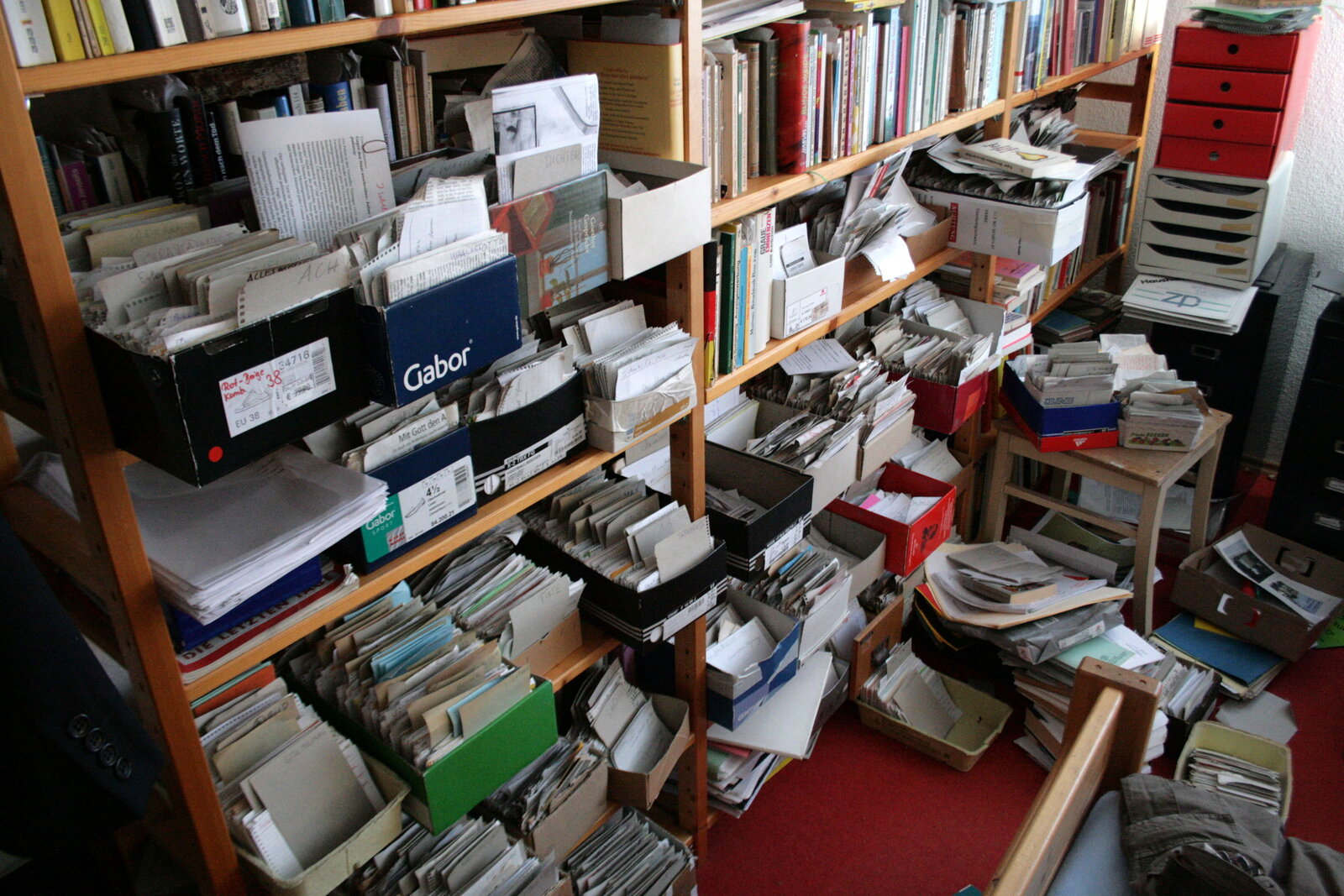
- Silo problem: At the top of the page in our notebook is the title of the book we are reading or of the talk we are listening to. When knowledge is locked into silos like that, it is no longer usable in the future. We would have to remember again and again where or when we got a piece of information. Only then can knowledge stay alive and join up with other knowledge.
- Competence illusion: We read something and are convinced we have understood it. A deceptive sense of understanding forms in our head. Because our brain closes the gaps that every learning task has as quickly as possible. If we then had to explain it in our own words, it wouldn't work.
On my search for the best solution for me, I took detours, for example I tried these:
But again and again I ran into the same problems and could never keep an overview for long, above all across the sheer amount of content.
Then I read an excerpt from an interview with Niklas Luhmann. He said, roughly, that he hadn't written his books himself, but that his Zettelkasten had done it for him. He was incredibly productive, hundreds of articles, dozens of books. That fascinated me so much that I wanted to look into it more closely.
I started with Notion and Evernote. I dropped both again. The structure was too rigid and too hierarchical for me. I couldn't break out of that folder thinking. We build silos for knowledge, and that is exactly what happens there too. Without folders I can't find anything again, and linking was too cumbersome for me back then. Maybe that is different today.
On top of that came a move between two systems. I hardly got my data out.
A proprietary format, difficult to export, just cumbersome and annoying. That's when it was clear to me: I don't want to depend on a platform. My knowledge should stay with me.
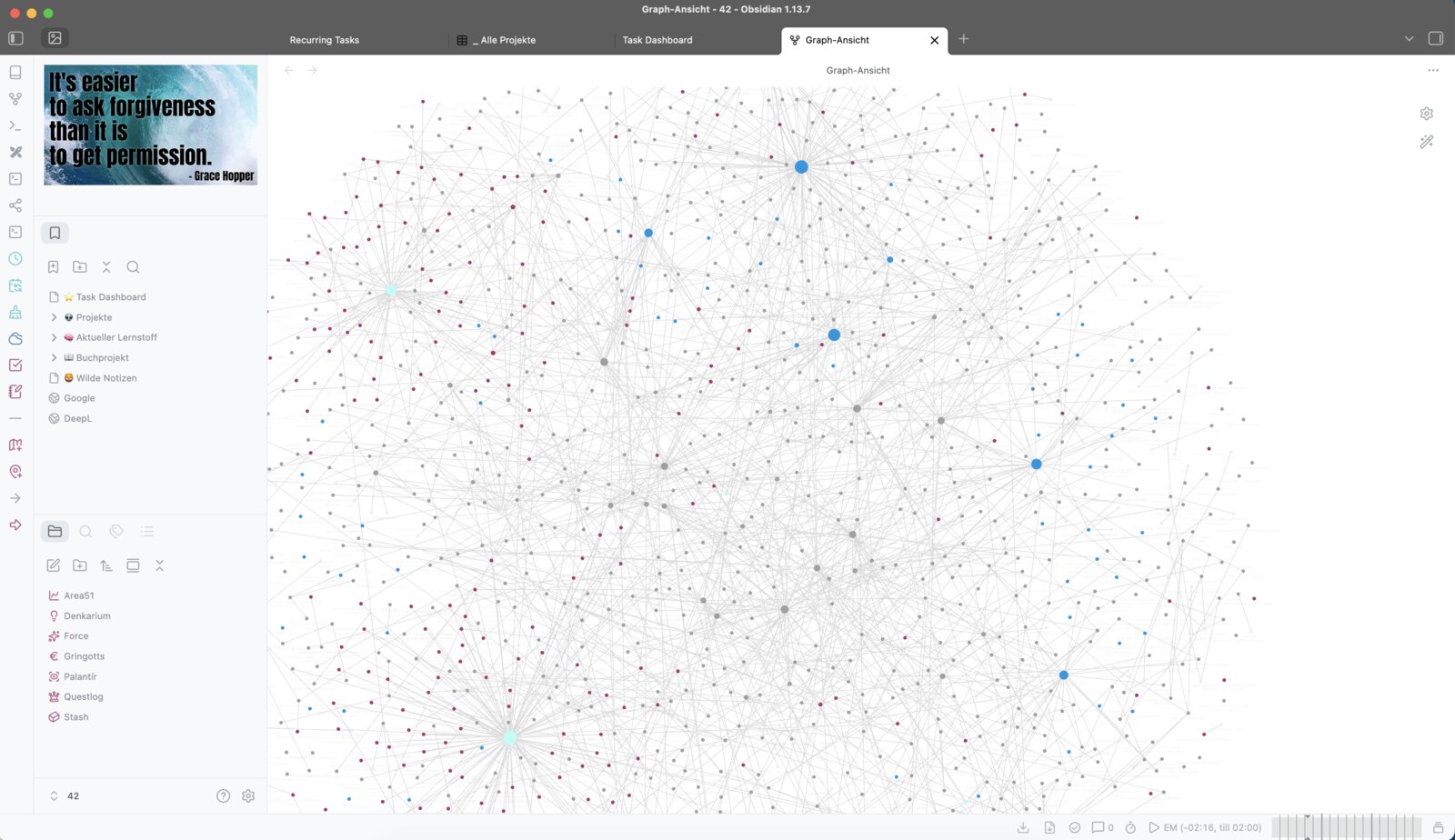
I ended up with Obsidian, and I have now been there for several years and I am pretty happy. Linking is very easy. Local storage was an absolute must-have for me. I don't depend on the platform, the knowledge is with me.
The start was not easy. I began with atomic notes, meaning small, atomic notes for knowledge. I could then quickly transfer the principle to other things, to projects, to contacts. I rebuilt the structure several times until it really fit me.
Just understanding what an atomic note even is and why mine wasn't any good was tough. The first quarter was exhausting, and I wasn't sure whether it was all worth it.
Then came the moment when I could link something new to something that was already there. Through keyword search I found something I had read in a book somewhere, and I could connect it with what I had just read in an article.
That showed me a gap I hadn't been aware of before. A question opened up that I had never seen before, and pretty quickly I was able to write a trade article for a magazine about it. That wouldn't have been possible before. I had blown up the knowledge silos.