
For two years I missed the convention of the German Speakers Association. This year, in Ingolstadt, I was back, and I was incredibly happy about it.
Basically, not that much has changed. That's the beauty of it.
Post
A grain of sand in an oyster, a talk on female rage and a new format for the PEGs. What I took home from the convention.
For two years I missed the convention of the German Speakers Association. This year, in Ingolstadt, I was back, and I was incredibly happy about it.
Basically, not that much has changed. That's the beauty of it.
It's like a class reunion for speakers.
I'm the coordinator of the PEGs, the Professional Expert Groups within the GSA. That's why I'm especially proud of this part.
Until now, the PEGs ran their own program the day before the convention. Every group had its own room and had prepared about three hours of content. The sessions ran in parallel, some in the morning, some after lunch.
That came with several problems. The morning sessions were always poorly attended, because PEG leaders and almost all participants often only arrive in the morning. On top of that, the slots were too long, we needed too many rooms and it was hard to switch in the middle.
This year we tried something new. In one big room there were several small stations, one for each PEG. Every PEG had 15 minutes for its content. Participants started at one station and could move on to the next after 15 minutes. Everywhere, they picked up a small impulse.
Each PEG was also asked to tell people what's great about their group and what you can learn there, and to give an input on one specific topic. Some PEGs built on each other and brought a new idea in every round. Others filled their slot with the same content every time.
These were the stations of the "Inspiration Circuit":
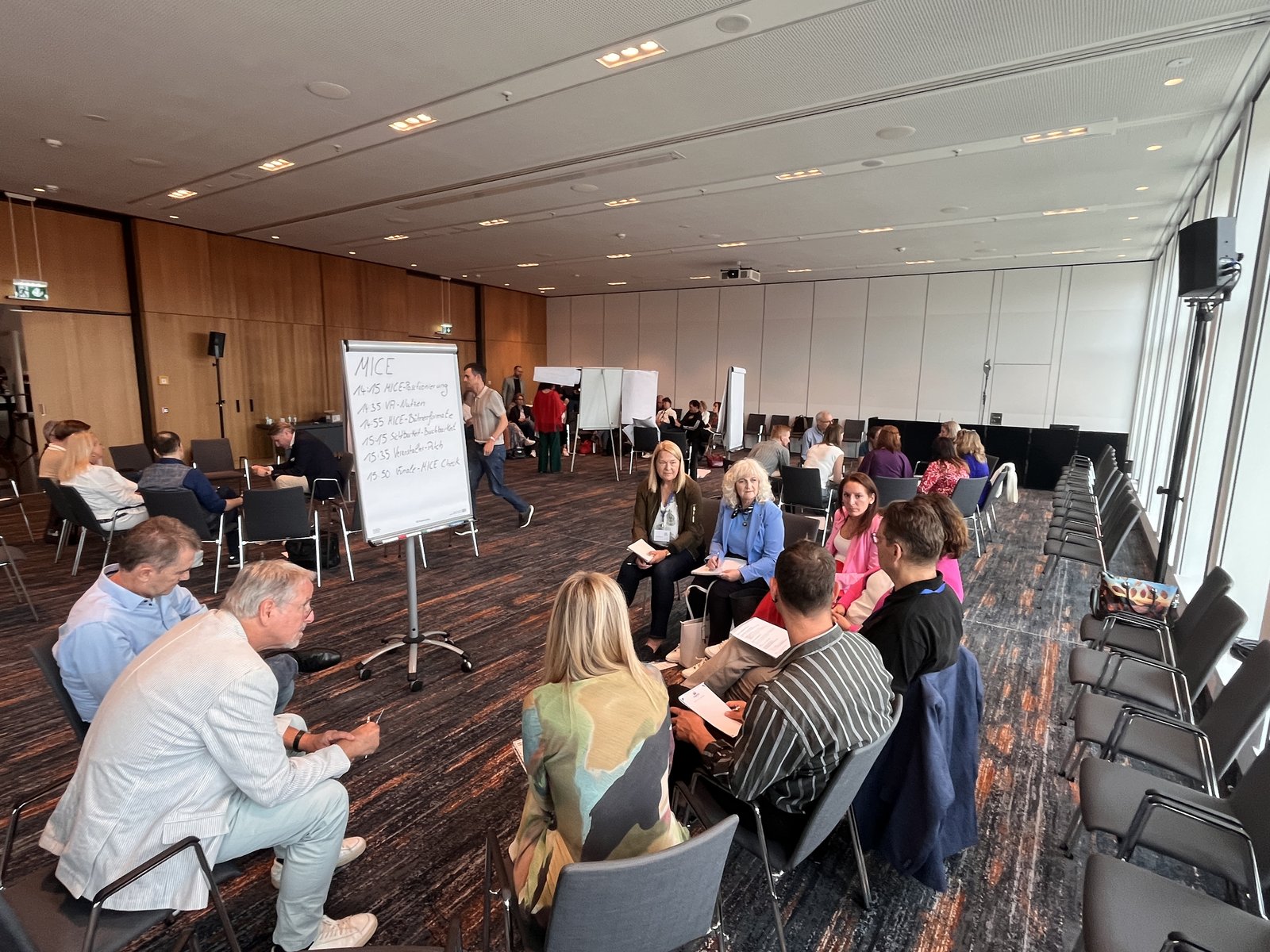

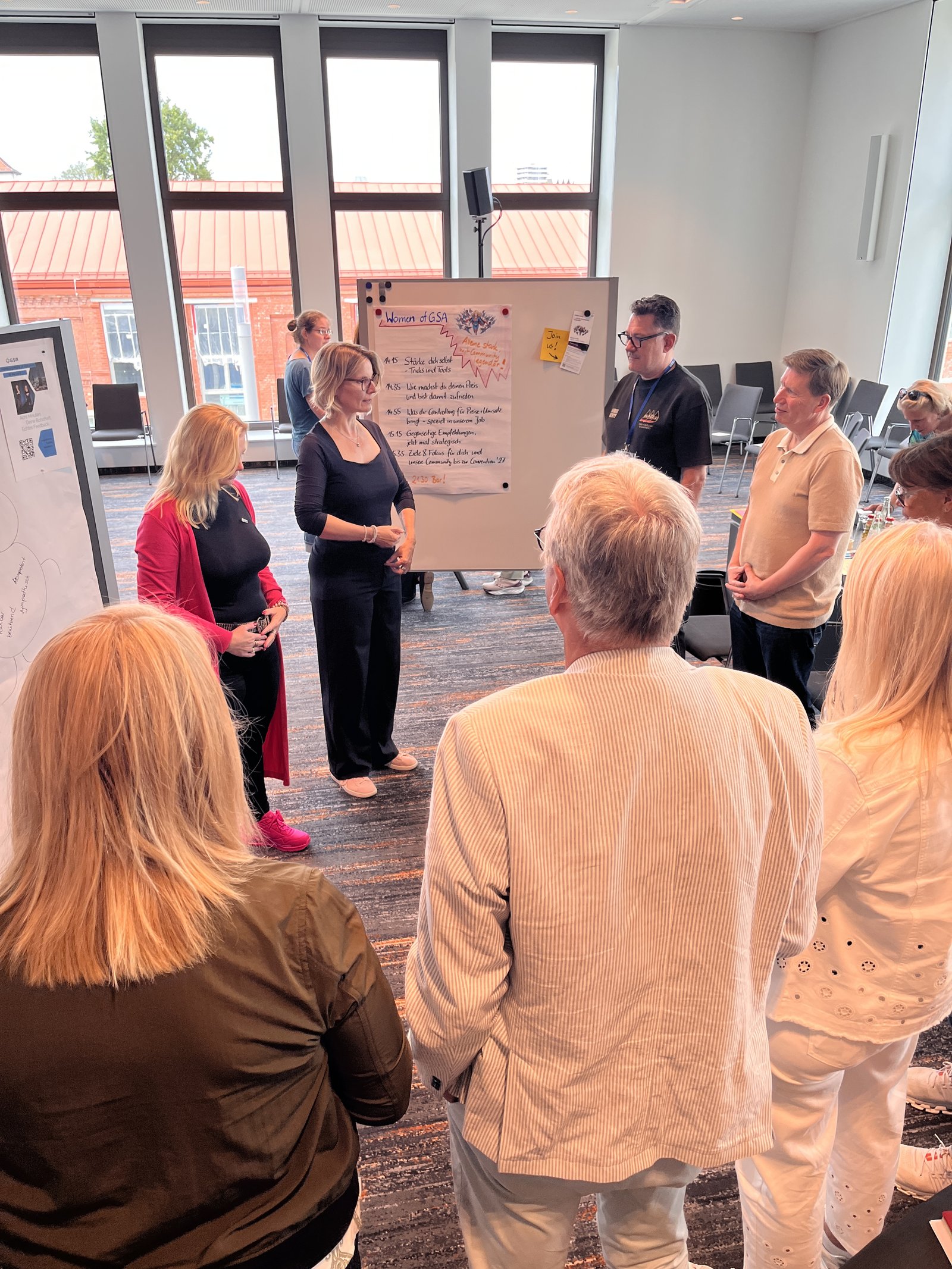
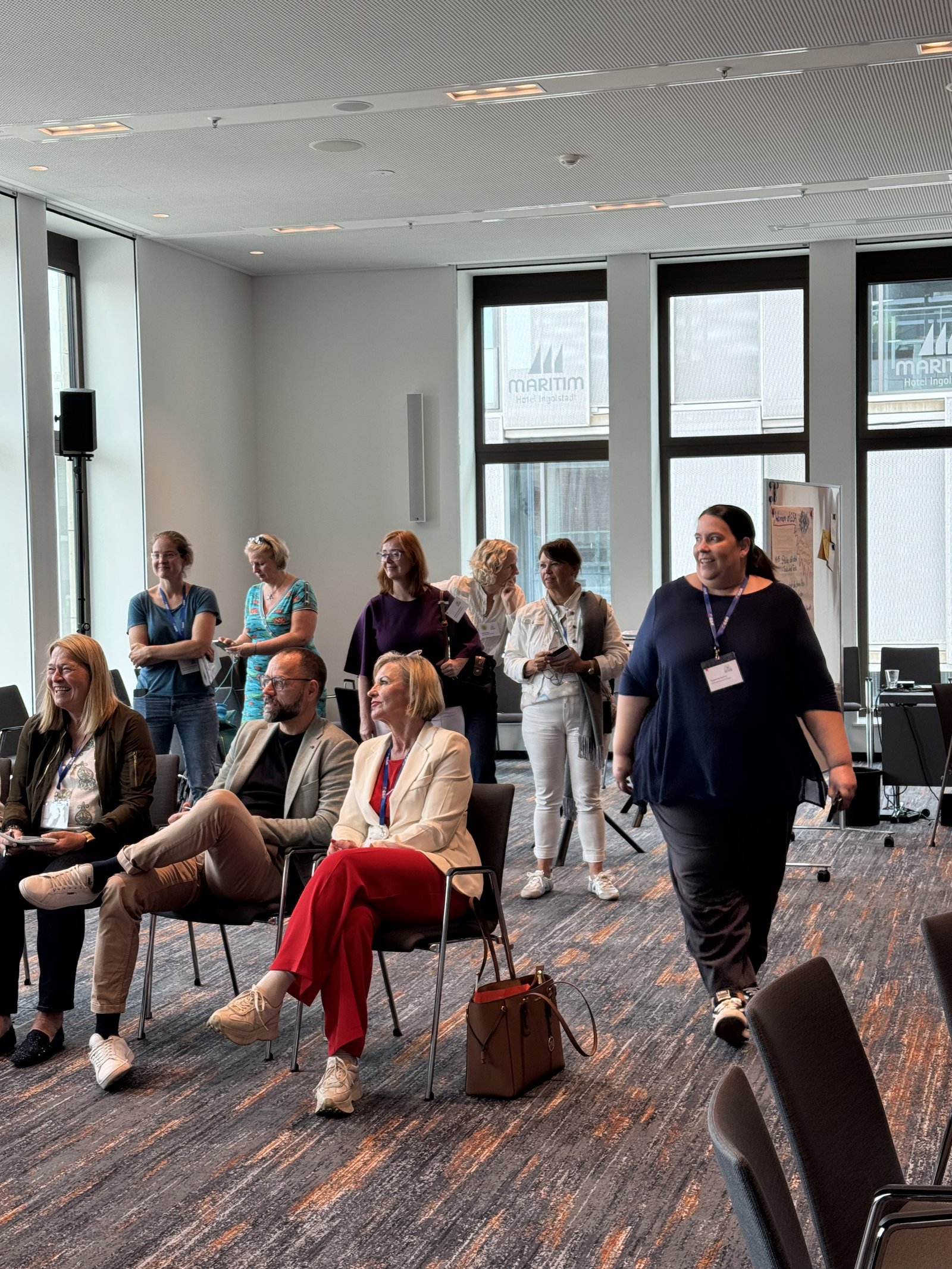
Everyone could sniff around everywhere, pick up quick impulses and put a small challenge into practice right away.
The feedback afterwards was wonderful and shows that we should carry on exactly like this. With a few learnings from this year, it will get even better.
There were many talks, and I'll only name two. One of them was Volker Busch's, and I liked it especially. His title: "Terribly beautiful uncertainty."
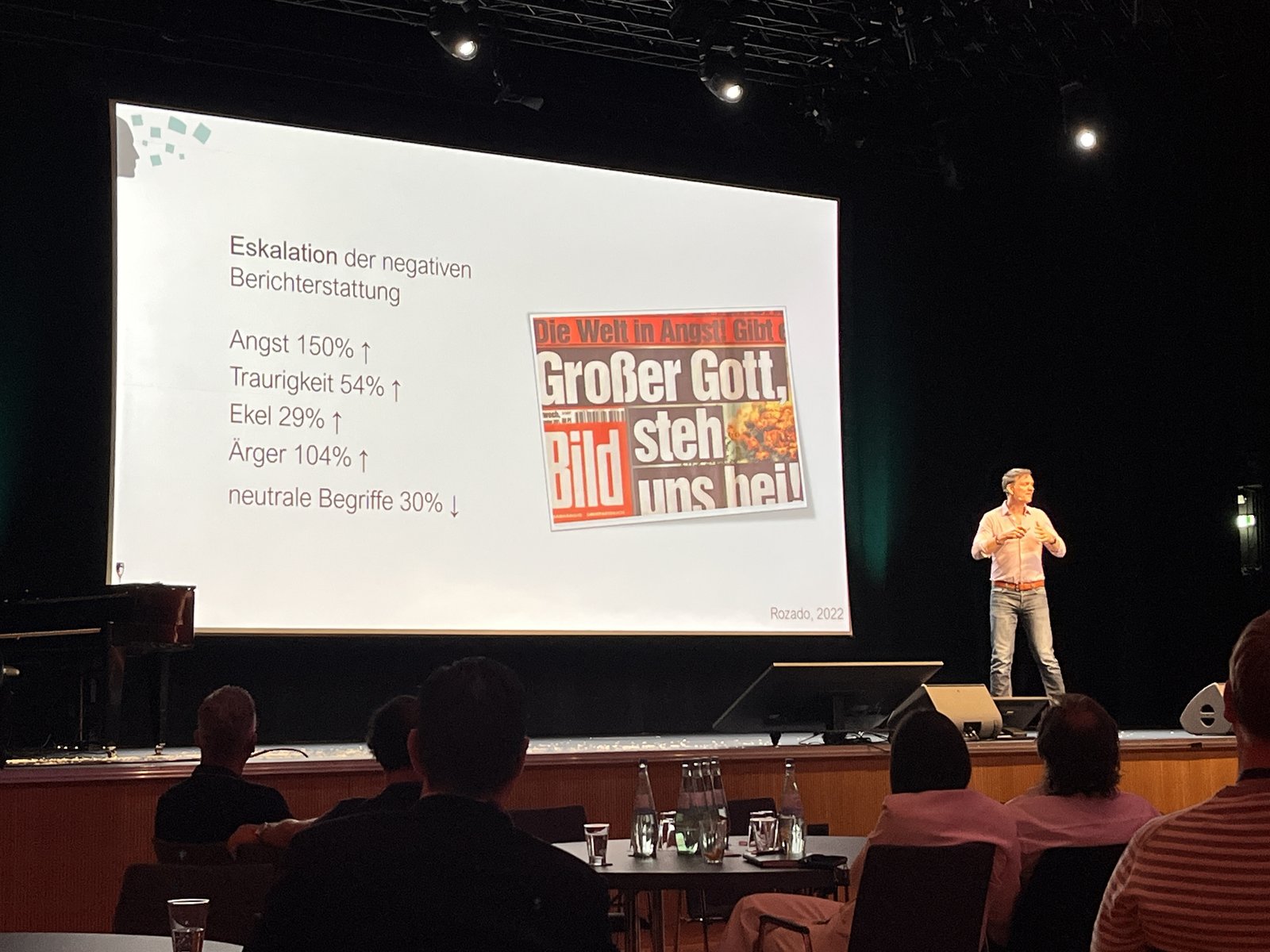
Volker distinguished between uncertainty about the world and the feeling of insecurity. The world is uncertain: the weather, the lottery numbers, politics. We can't change that. Insecurity, on the other hand, is the feeling that this uncertainty triggers in us. And that is something you can work on.
He also said that action comes first and mindset second, not the other way around. And a medium level of insecurity makes us perform best: total security makes us passive, panic makes us unable to act.
At the end came his favorite saying: "Our strongest engine is disturbance." The most beautiful image for it, he said, is the oyster with the pearl. The grain of sand in the oyster is the disturbance, and from it growth arises, the special thing. The condition is that the oyster doesn't reject it but wraps it lovingly. In a society as focused on efficiency as ours, we hardly have any grains of sand in the gears anymore, precisely because they are disturbances.

The second talk I want to mention came from Anna Engers: "Hello patriarchy, we need to talk."
We have known each other for a long time, and the big topic of her talk, female rage, was not new to me. Anna said a lot of great things and stirred many feelings in the room. Hers was probably the talk about which I heard the most divergent voices later in the coffee break.
With the men in the audience, female rage, in my impression, didn't land as what it is. More as an anger, a bitchiness that we women have without really needing to have it. After all, we are doing fine today, we can vote, work and have our own bank account. What are we even complaining about?
For many women, on the other hand, she addressed many things that we know, that we feel and understand, and for which we often have no words.