LernOS is an open system for peer learning. There are guides on all kinds of topics, and a small group works through such a guide together. That group is called a circle. You'll find more at lernos.org (in German).
The principle: learning by doing, supported by others. Nobody gives a lecture, nobody is the expert. Everyone reads the same material, tries the same task in their everyday life and then tells the others what happened. That task is called a kata.
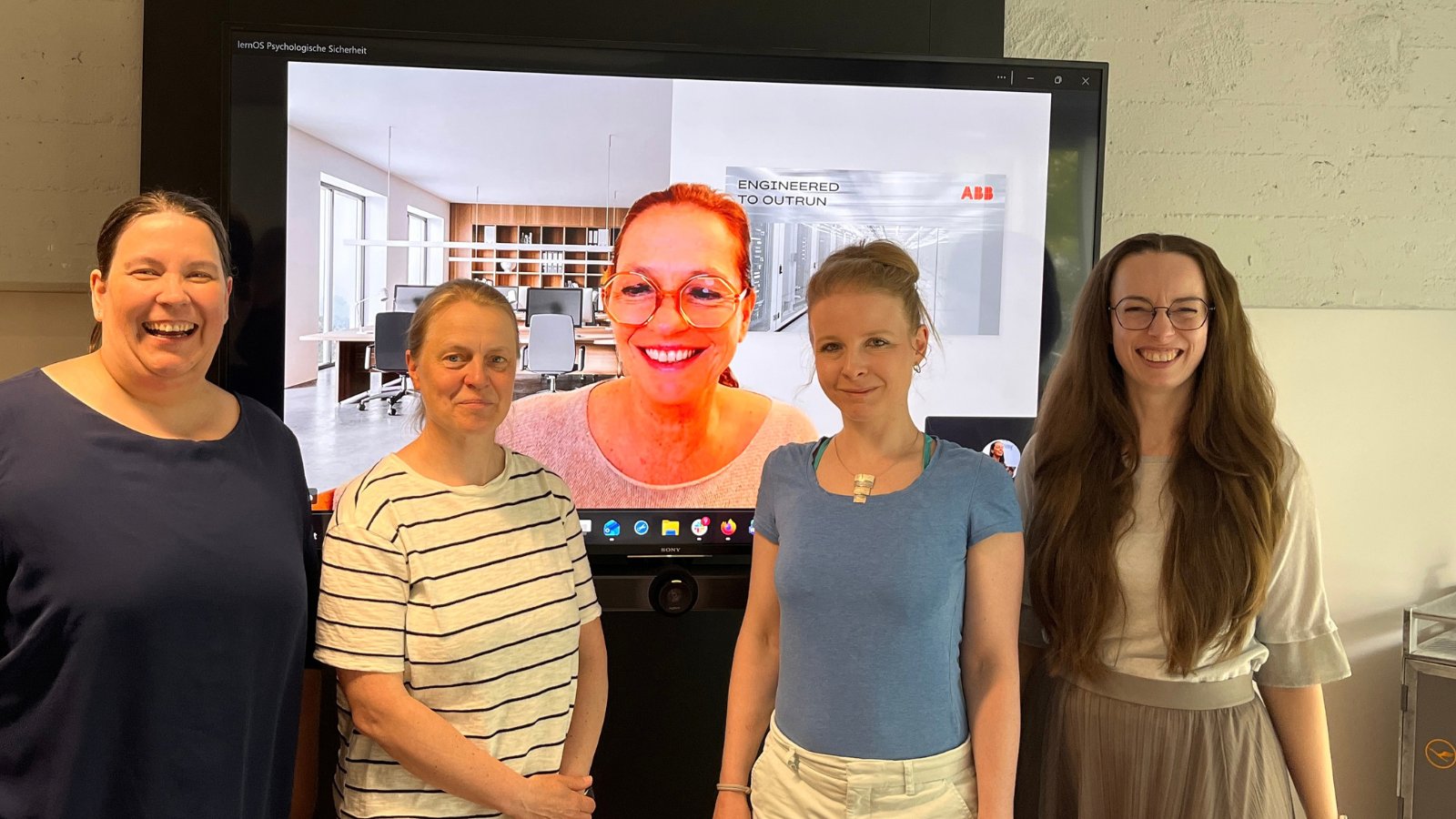
There were five of us in our circle. We met once a week for about 60 minutes. Every meeting had the same shape: check-in, discuss the kata, wrap-up. You don't need more than that.
I got into a circle through Christian Kaiser from DATEV. He regularly calls on people to form circles, and through one of those calls I was able to join one. One example of these calls is DATEV's Learning Circle Experience (in German): several circles from different companies go through a twelve-week learning journey at the same time.
I wanted to join a circle on psychological safety. There was no guide for it. So we developed one, and it's brand new.
It runs over 13 weeks, plus a week 0 for arriving. Every week has a core message, a short theory part, a source and a kata. The arc goes like this:
- Weeks 1 to 4: understand what psychological safety is, what the research says, where it's missing in your own everyday life and what destroys it
- Weeks 5 to 8: your own role, leadership, language and meetings
- Weeks 9 to 13: design your own experiment, run it, reflect on it and write a transfer plan
The most important core message from it, because it hits the topic for me:
Yasmine Unger, Jennifer Düngfelder, Susanna Wolf and Julia Methe were part of it.
We got to know each other wonderfully. That sounds like a line from the "we all love each other" playbook, but it's a finding. If you build a group around psychological safety, you get the chance to practise it yourself right away. The guide even demands it: honesty before harmony is in our ground rules.
And we managed that well. We were able to share things that needed exactly this ground of psychological safety to be talked about, without it turning into a pure feelings show. Because it's about the result.
Our closing meeting took place live, on 6 July 2026 in Nuremberg. It was a truly wonderful experience.