
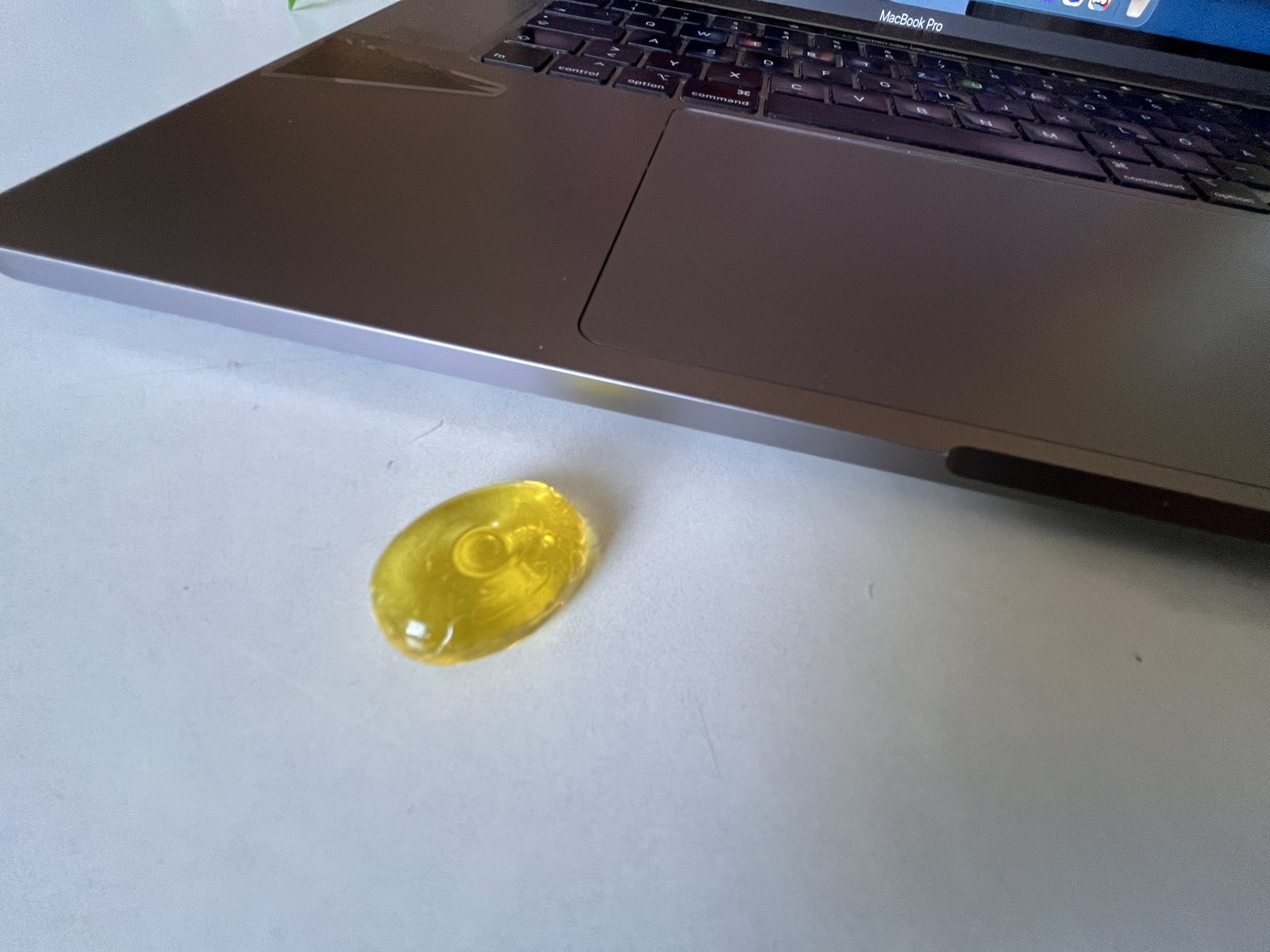
This afternoon I'm sitting at the kitchen table, laptop open, ready to write. I want a candy to suck on while I do. I unwrap it, but before I can put it in my mouth, it falls out of my hand.
Post
A candy slips out of my hand, and my head has painted the disaster before it reaches the table. What that has to do with change projects.
This afternoon I'm sitting at the kitchen table, laptop open, ready to write. I want a candy to suck on while I do. I unwrap it, but before I can put it in my mouth, it falls out of my hand.
The picture was there before the candy touched the table.
The candy drops from maybe 20 to 25 centimeters. A fall that takes just under a quarter of a second. In that time I already see it lying on the floor, with a bit of fluff stuck to it. And the impulse comes with it: catch it, or it's gone!
Nothing serious was at stake. Still, there was fear. A tiny bit, but it was there, and it was there before I had decided anything.
I wanted to know how fast something like this really is. In a study with epilepsy patients, researchers were able to measure directly in the amygdala, the part of the brain that plays a central role in fear. It responded to fearful faces after about 74 milliseconds.
That's less than a tenth of a second. We become aware of something much later.
In other words: by the time I notice I'm afraid, the reaction has long since run. I can't watch it happen. I only see the result.
I've worked in change projects for many years, and again and again leaders demand "more ownership". But the foundation for it is fragile and needs careful tending. One element of the ownership triangle is psychological safety, and it takes a lot of effort to build and can be destroyed quickly by exactly these kinds of unconscious reactions.
That means: the unconscious deserves as much attention as what we plan consciously. Where do we skip over a statement? Where do we cut someone off? Where do we make someone feel small?
There's a good side to this, too. Jennifer Düngfelder, a colleague from the learning circle on psychological safety (more on that in the post about the LernOS circle), told me about social grunting. I love the term.
It means what we do in conversations all the time: nodding in agreement and making agreeing noises. Mmh. Yes. Mmh, mmh. In live meetings we have our whole body language for that. In online meetings you only see the frame, the portrait, so the nodding and the humming matter even more.
When someone in the group does that every now and then, the person speaking gets an answer to a question they never ask out loud: Am I on the right track with what I'm saying? Is the direction good?
It has to be honored, though. Not grunting along in agreement and then saying afterwards that it was all rubbish. Instead, pick up what was said and say: I see it going in the same direction, I just need to branch off at one point and ask a question. Then the addition isn't an attack, and that is exactly what creates psychological safety.
Source: Direct Evidence of Ultra Fast Response to Fear in the Human Amygdala (Neuroscience News, on the study in Nature Neuroscience, 2016)