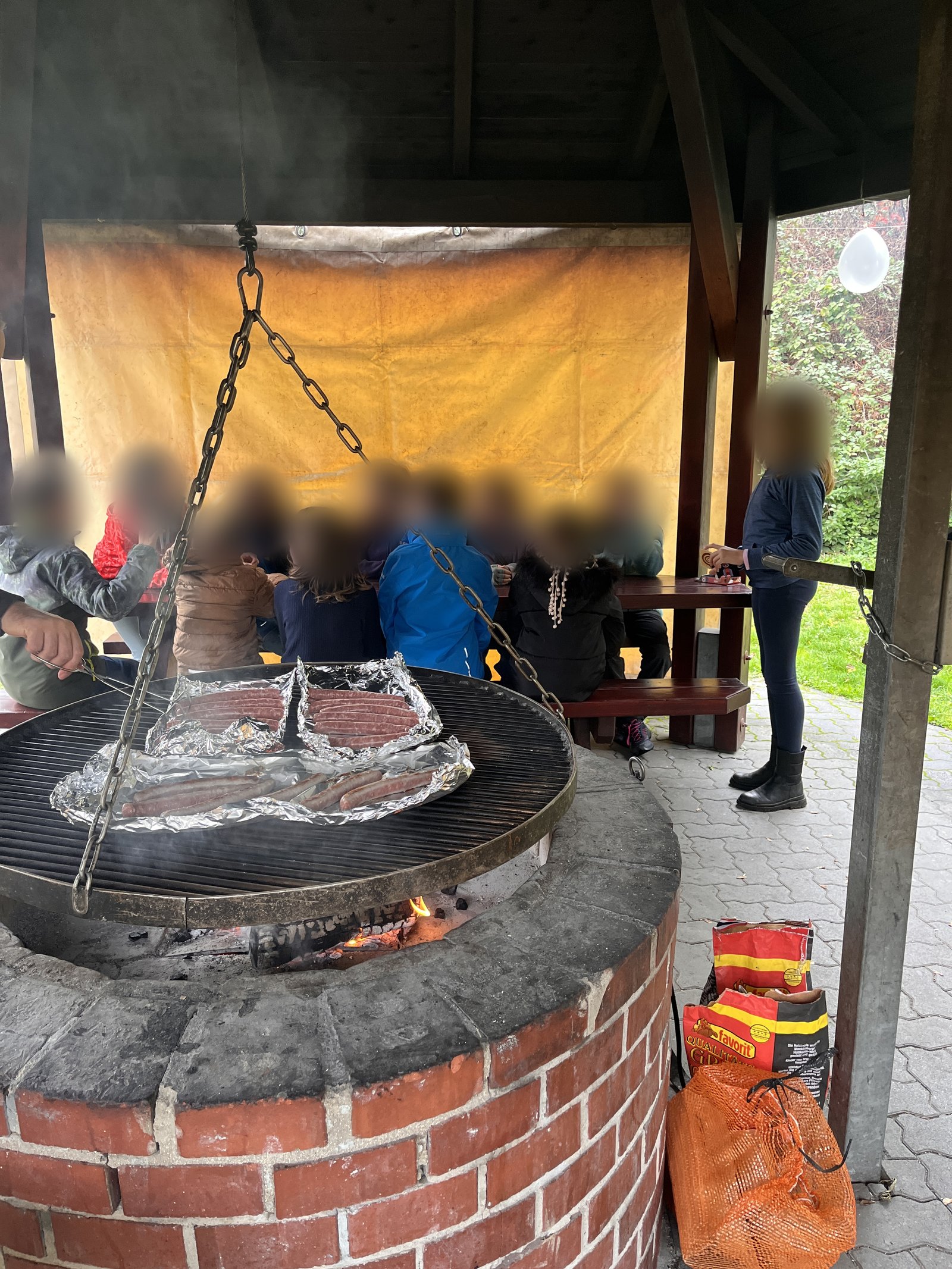
They could run and romp around, swing and climb on a small playground next door, and look for walking sticks in a little patch of woods. And of course they could play Werewolf.
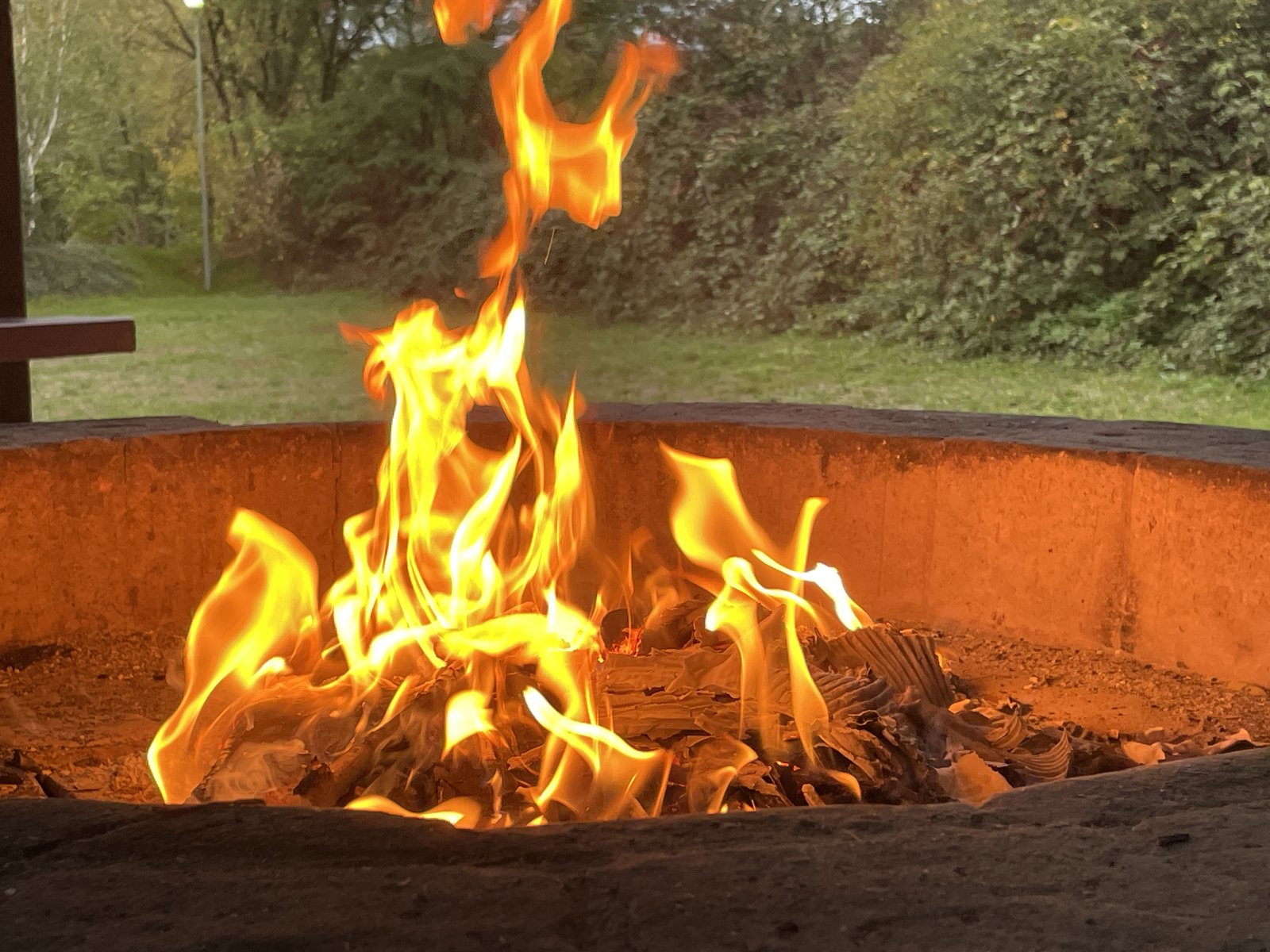
When, after a round through the woods, they flopped panting onto the benches and asked for sausages, one of the kids said, "At the fire you are always safe." All the others nodded in agreement and gazed thoughtfully into the fire.
Interesting, because probably none of the kids had ever been so exposed to the wilderness that a fire was the only place they felt safe. Reason enough to look into where that comes from. And while doing so, I discovered something interesting.
Four of these five jobs were absolutely clear to me, and the fifth one at least in outline, but not yet in depth.
With fire, the day got longer. Where darkness would have ended things, there were now hours to sit together. And this is where it gets most interesting for me, also as a change storyteller.
The anthropologist Polly Wiessner studied what the Ju/’hoansi in northwestern Botswana talk about during the day and what they talk about in the evening at the fire. The differences are clear.
During the day, conversations were mostly about complaints, criticism and gossip (34 percent) and about economic topics such as hunting (31 percent). Stories made up only 6 percent. In the evening at the fire, it was 81 percent.
Wiessner concludes that these stories keep values and rules alive, for example sharing food in times of need. They also feed the imagination: whoever listens to stories can picture people and places that are far away.
During the day, complaining and criticizing serve a purpose: enforcing norms, reducing jealousy, settling disputes. Wiessner sees criticism as a precondition for people being able to live together at all. When a dispute was not settled, people moved on.
In the evening it is different. Women and men tell stories, mostly about people everyone knows. There are no heroes being celebrated and no raised index fingers. One example from the study: a current marital conflict was discussed during the day, and in the evening people told stories about earlier marriages.
Wiessner says these stories foster compassion, trust, understanding, sociability and humor. She also suspects that storytelling strengthens the ability to put oneself in other people's shoes and to recognize how they think.
At the latest when I wrote my book, I dealt a lot with storytelling, with its origins, backgrounds and techniques, but this difference between day and evening I need to look at more closely again.